

Why Your Labs Came Back “Normal” But You Still Feel Terrible
Your labs came back normal. So why are you still exhausted, foggy, gaining weight, and feeling like something is just…off?
I hear some version of this all the time.
“My doctor said everything looks normal.”
And yet, you don’t feel normal.
You’re tired even though you’re sleeping. Your brain feels slower than it used to. Your body composition is changing even though you haven’t dramatically changed the way you eat. Your hair is shedding. Your motivation is gone. Maybe you’re more anxious, more irritable, or you just don’t feel quite like yourself anymore.
So you go to your provider. They order labs.
Everything comes back “within normal limits.”
Maybe you’re told to get more sleep, manage your stress, exercise more, or clean up your diet.
And none of that is necessarily bad advice.
But it also doesn’t answer the question:
Why do I feel so different?
Sometimes the problem isn’t that your labs are normal.
It’s that we haven’t looked at enough of them—or we’re looking at individual numbers instead of the pattern they create together.

What “normal” actually means
A laboratory reference range is primarily designed to help identify values that fall outside an expected range.
That’s useful. We absolutely need reference ranges.
But being inside the range doesn’t automatically tell us that a particular marker is ideal for you, nor does it explain how that number fits with your symptoms, your history, your age, or the rest of your labs.
There can be a lot of real estate between clearly abnormal and feeling your best.
For example, you can have normal hemoglobin and still have low iron stores.
Your fasting glucose can look completely respectable while your insulin is working overtime behind the scenes to keep it there.
Your TSH can be within the laboratory range while other thyroid markers—or the bigger clinical picture—give us more information.
And during perimenopause, you can have hormone levels that technically fall somewhere on a reference range while still experiencing very real symptoms related to fluctuating hormones.
This is why I don’t like looking at one lab value in isolation.
Labs are pieces of the puzzle. Your symptoms are pieces of the puzzle. Your history is another piece.
You need all of them.
What your annual labs may be missing
A typical annual physical might include a CBC, metabolic panel, lipid panel, glucose or A1c, and sometimes a TSH.
That’s a perfectly reasonable screening panel.
But if you’re coming in saying:
“I’m exhausted.”
“My hair is falling out.”
“I’ve suddenly gained weight around my middle.”
“I can’t think clearly.”
“I’m waking up at 3 a.m.”
“My periods have changed.”
“My libido disappeared.”
…then I want more information.
Here are some of the labs I commonly consider.
Fasting insulin
This is one of my favorites because glucose only tells us part of the story.
Your body may be producing increasing amounts of insulin for quite a while in order to keep your glucose within a normal range.
So if we only check fasting glucose or A1c, we may miss some of the earlier metabolic changes.
High insulin can also fit into a bigger pattern that includes increased hunger, energy crashes, difficulty losing weight, increased abdominal fat, elevated triglycerides, PCOS, and other signs of insulin resistance.
That’s why I frequently look at fasting glucose and fasting insulin together, rather than waiting for blood sugar alone to become abnormal.
A fuller thyroid picture
TSH is important.
But it isn’t the entire thyroid story.
TSH is the signal coming from your pituitary telling your thyroid how hard it needs to work. Depending on the situation, I may also want to see Free T4, Free T3, and sometimes thyroid antibodies.
That additional information can be particularly helpful when someone has symptoms like fatigue, constipation, feeling cold, hair changes, brain fog, or unexplained changes in weight.
It doesn’t mean every tired woman with a TSH of 3 needs thyroid medication.
It means we shouldn’t treat one number like it exists in a vacuum.
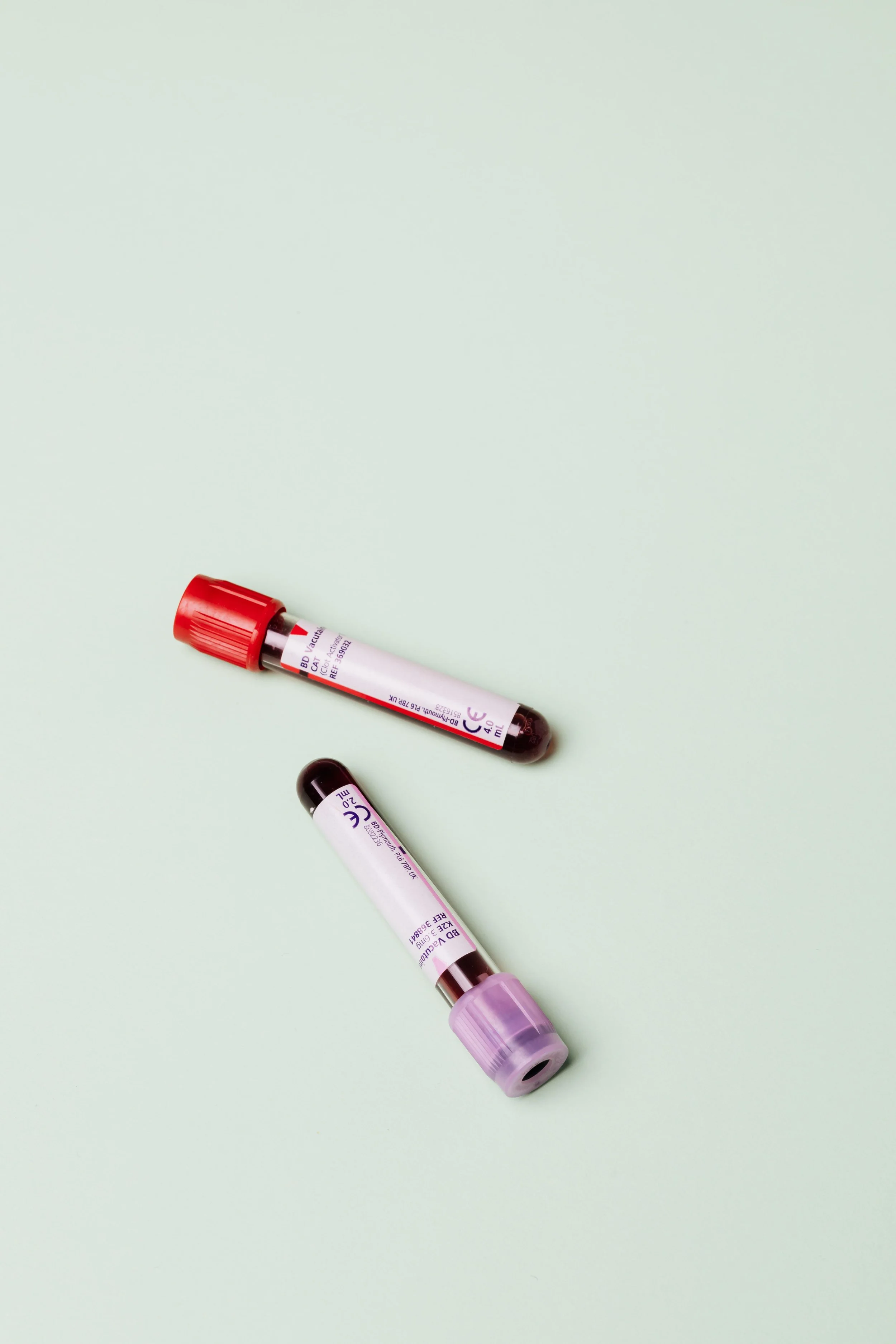
Ferritin
This one gets missed all the time.
You can have a normal CBC and normal hemoglobin and still have relatively low iron stores.
Ferritin gives us information about stored iron.
And when someone tells me she is exhausted, losing hair, struggling with restless legs, feeling short of breath with exercise, or just experiencing that deep “I have nothing left” kind of fatigue, I want to know what her iron stores look like.
Because “you’re not anemic” and “your iron status is excellent” are not necessarily the same thing.
Hormones
Estradiol. Progesterone. Testosterone. DHEA-S.
These aren’t routinely included in an annual physical, and they don’t need to be ordered on every woman who walks through the door.
But if someone is experiencing symptoms that sound hormonal, I’m going to at least consider whether they add useful information.
There is also an important caveat here:
Hormone testing during perimenopause can be messy.
Your hormones are fluctuating—sometimes dramatically—from one week to the next. So a single estradiol level isn’t going to “diagnose” perimenopause.
That’s why symptoms, menstrual changes, age, history, and the overall clinical picture matter so much.
Labs can give us information.
They are not the whole story.
Thyroid antibodies
If I have reason to suspect autoimmune thyroid disease, I may check thyroid peroxidase antibodies and thyroglobulin antibodies.
Someone can have thyroid antibodies before their thyroid function becomes significantly abnormal.
Knowing that autoimmune activity is present can change how closely we monitor the thyroid over time and gives us additional context for what may be happening.
hs-CRP
High-sensitivity C-reactive protein is one marker that can give us information about inflammation.
It’s nonspecific—which means it doesn’t tell us why inflammation is present—but when we combine it with someone’s metabolic health, cardiovascular risk factors, symptoms, and other labs, it can add another useful piece to the picture.
Again, the goal isn’t to collect every lab available.
The goal is to order labs that answer a clinical question.
The part I think we get wrong about “optimal” labs
You’ll hear people talk about “normal” versus “optimal” levels.
And I understand why.
Someone can absolutely sit at one end of a reference range and feel very different from someone sitting at the other end.
But I also don’t believe there is one magical number every person has to reach.
I don’t want to take a perfectly healthy woman and convince her something is wrong because her lab doesn’t fall into somebody’s favorite internet “optimal range.”
That’s not the goal either.
What I care about is context.
What are your symptoms?
What has changed?
What do your labs look like together?
What did they look like two years ago?
Are several markers moving in the same direction?
Does the lab result make sense with what is happening clinically?
Because two women can have the same TSH, ferritin, estradiol, or fasting insulin and not need exactly the same thing.
I treat people, not spreadsheets.
The labs help me understand the person.

So what should you do if your labs are “normal” but you still feel terrible?
First, get a copy of your actual results.
Not just the message that says, “Everything looks great!”
Look at the numbers. Keep them. Labs become much more valuable when you can see trends over several years instead of looking at each test as a separate snapshot.
Second, make sure the labs being ordered actually match the symptoms you’re experiencing.
If you’re struggling with unexplained weight gain and metabolic changes, fasting insulin may add information.
If you have fatigue and hair loss, ferritin deserves a look.
If thyroid symptoms are present, you may need more context than TSH alone.
If you’re in your 40s and suddenly sleeping poorly, having cycle changes, experiencing anxiety, losing your libido, and wondering what happened to your brain, we should probably be talking about perimenopause—not simply telling you that your CBC looks fantastic.
And finally, look for patterns.
Most of the women I see don’t have one spectacularly abnormal lab that explains everything.
They have several smaller things happening at the same time.
Maybe iron stores are lower than they used to be.
Insulin is creeping up.
Muscle mass is going down.
Estradiol and progesterone are fluctuating.
Sleep has deteriorated.
Stress is higher.
Alcohol is affecting recovery more than it did ten years ago.
Thyroid function has shifted.
Individually, none of those things may look dramatic.
Together, they explain why she doesn’t feel like herself anymore.
That is the part we have to stop missing.
I put together a free guide organized by the concerns I hear about most—perimenopause, PCOS, postpartum changes, hair loss, weight gain, and men’s hormonal health.
It walks you through which labs may be worth discussing with your provider, why we order them, and how they fit into the bigger clinical picture.
Your labs may be “normal.”
But if you still don’t feel well, the conversation shouldn’t end there.